Before modern brewing, flavour came from honey, fruit, and time.
There was a time when what you drank depended entirely on what you had to hand.
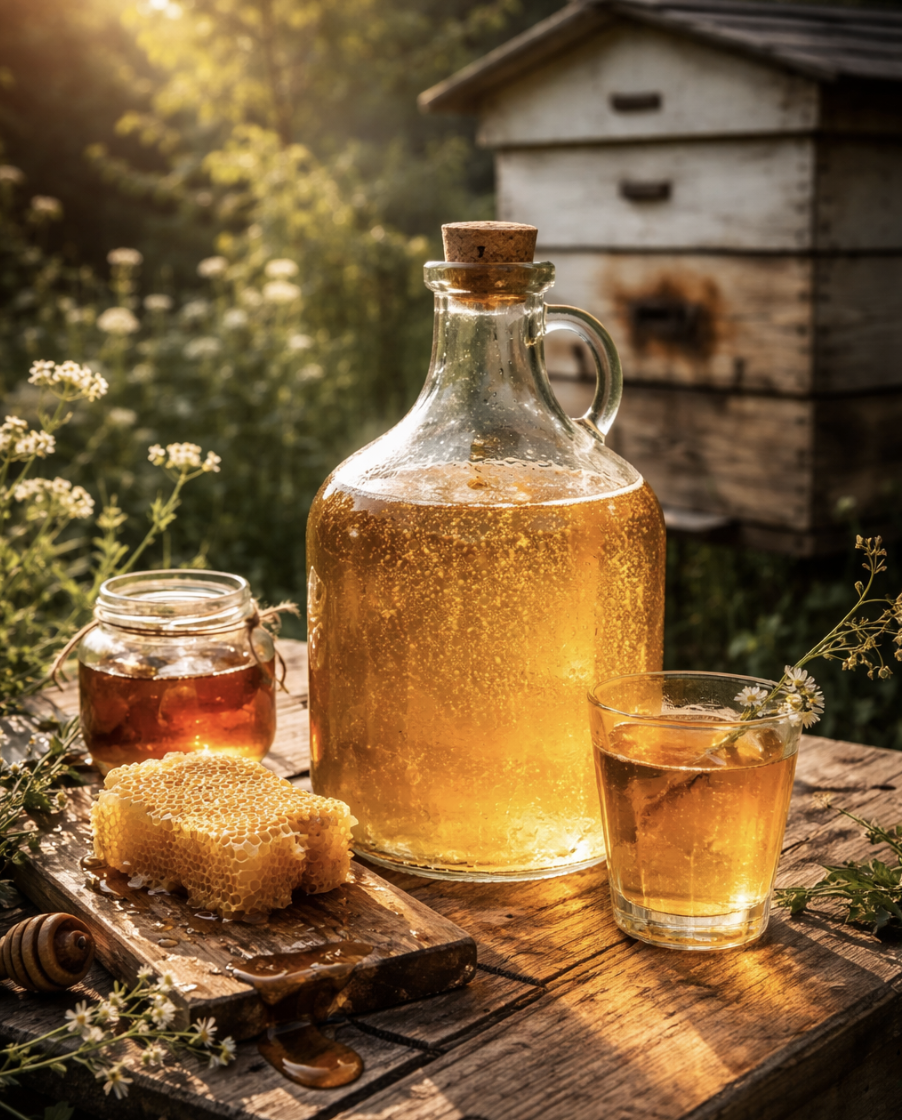
Honey became mead. Pears became perry. Wine was softened and spiced into something altogether more refined. These weren’t novelty drinks, they were part of daily life, shaped by landscape, season, and access.
Many of these drinks are documented in medieval household texts and early food history research, offering a glimpse into how people actually drank and not just how we imagine they did.
Many have quietly disappeared, replaced by cleaner, faster, more predictable methods. But a few remain… worth rediscovering not just for their flavour, but for the way they slow things down.
Mead — The Oldest Drink We Know
Mead is widely considered one of the oldest alcoholic beverages, with chemical evidence of fermented honey drinks dating back to around 7000 BCE in northern China.
Archaeological analysis published in the Proceedings of the National Academy of Sciences identified residues of honey, rice, and fruit in ancient pottery vessels, suggesting early forms of mead-like fermentation long before written history.
Later, classical authors such as Pliny the Elder documented honey-based drinks in Roman times, while medieval Europe saw mead produced in monasteries and households where grapes were scarce.
In Norse tradition, mead held symbolic importance. Most famously in the myth of the Mead of Poetry, believed to grant wisdom and inspiration.
Perry — The Quiet Counterpart to Cider
Perry (fermented pear juice) has deep roots in England and northern France, particularly in regions like Gloucestershire, Herefordshire, and Normandy.
Unlike apples, pears produce a lower-acid juice, resulting in a softer, more delicate drink.
Historical references to fermented pear beverages appear in early agricultural and household records, and by the medieval period, perry was a recognised rural staple alongside cider.
Food historian Ken Albala notes that fruit fermentation, including pears, was essential in medieval diets, providing both preservation and a safe alternative to water.
Hypocras — Spiced Wine of Courts and Feasts
Hypocras (or hippocras) was a spiced and sweetened wine widely consumed in medieval and Renaissance Europe.
Its origins trace back to Roman traditions of aromatised wine, but by the Middle Ages it had become a luxury digestive, often served at the end of a meal.
Recipes appear in texts such as:
- Le Ménagier de Paris (14th century household manual)
- Various European court records and culinary manuscripts
The drink typically combined wine with sugar and spices like cinnamon, ginger, and cloves, then strained through a cloth filter producing a smooth, perfumed result.
Food historian Terence Scully notes that hypocras was associated with status and hospitality, rather than everyday consumption.
Other Forgotten Brews Worth Knowing
Medieval Europe was far less standardised than modern brewing culture suggests.
Other drinks included:
- Bochet — mead made from caramelised honey, producing deep, toasted flavours
- Cyser — a blend of apple cider and honey fermentation
- Fruit wines — including blackberry, mulberry, and plum, often made to preserve seasonal harvests
As described in historical food studies, these drinks were less about precision and more about resourcefulness and locality.
3 Worth Making Today
Simple Mead (Small Batch)
A simple version of one of the oldest known fermented drinks — slow, floral, and deeply tied to early human history.
Ingredients
- 1 cup good-quality honey
- 3 cups filtered water
- ¼ tsp wine or champagne yeast
Method
- Warm the water gently (do not boil) and stir in honey until dissolved.
- Allow to cool to room temperature.
- Pour into a sterilised glass jar or plastic bottle with a screw top lid.
- Add yeast.
- Cover loosely or fit with an airlock.
- Leave to ferment in a moderate temperature (around 22C but don’t overthink this), dark place for 2–4 weeks.
- You should see bubbling within a few days, a sign the yeast is active and fermentation is under way.
- Birp the jar or bottle every few days after the first week.
To finish
Strain if needed, bottle, and chill before drinking.
👉 The flavour will improve with time, even a few extra weeks makes a difference.
Simple Perry (Pear Cider)
A softer, more delicate alternative to cider — lightly floral and best enjoyed young.
Ingredients
- 1 litre preservative-free pear juice (juice from fresh if possible)
- ¼ tsp cider yeast
Method
- Pour juice into a sterilised plastic bottle or jar.
- Add yeast and mix gently.
- Seal with airlock or leave lid slightly loose.
- Ferment for 1–3 weeks.
- You should see gentle bubbling within 1 to 3 days which means fermentation has begun.
- Once fermentation slows, transfer to the fridge carefully. Never seal tightly during active fermentation.
To finish
Chill well before serving.
👉 This is best enjoyed fresh, while still lightly sparkling.
Modern Hypocras (Spiced Wine)
A medieval digestive — warming, spiced, and quietly indulgent.
Ingredients
- 1 bottle red wine
- 2–3 tbsp honey or sugar
- 1 cinnamon stick
- 2 cloves
- small piece fresh ginger (or ½ tsp ground)
- pinch nutmeg
Method
- Combine all ingredients in a jar or saucepan.
- Warm gently (do not boil), then remove from heat.
- Allow to infuse for several hours or overnight.
- Strain through a fine sieve or cloth.
- Unlike mulled wine, hypocras is not meant to be cooked. The flavours develop through slow infusion rather than heat.
To serve
Serve at room temperature or gently warmed.
👉 The flavour should be soft, spiced, and balanced — not overpowering.
Sources & Further Reading
- McGovern, P. E. et al. (2004). Fermented beverages of pre- and proto-historic China. Proceedings of the National Academy of Sciences.
- Albala, Ken (2003). Food in Early Modern Europe. Greenwood Press.
- Scully, Terence (1995). The Art of Cookery in the Middle Ages. Boydell Press.
- Le Ménagier de Paris (14th century household manuscript)
- Unger, Richard W. (2004). Beer in the Middle Ages and the Renaissance. University of Pennsylvania Press.
✨ Final Note
These are small batch, introductory methods. Not just recipes but fragments of history, still entirely within reach of a modern kitchen.